
Black and White Minimalist Square Company Logo
Presto Restore Minneapolis, MN
Structural Drying That Protects What's Behind the Walls
Family-owned · Locally Trusted

Structural Drying That Protects What's Behind the Walls

Structural drying after water damage. We use 'in-place' drying with air movers and dehumidifiers to protect your home fast. Call Presto Restore 24/7.

24/7Calls answered
1–2hDry time
7-DayGuarantee
AntimicrobialCleaningHandymanEco-Friendly
FreeEst.
Instant Quote

Get a real estimate in 60 seconds.

We'll follow up within one business day. No pressure, no upsells.

No obligation · Responds within 1 business day

Carpet CleaningWater ExtractionUpholsteryTile & GroutAir Duct CleaningOdor RemovalPet StainsCommercialCarpet CleaningWater ExtractionUpholsteryTile & GroutAir Duct CleaningOdor RemovalPet StainsCommercial

Structural drying is the process of removing moisture from walls, floors, and framing after a water intrusion event. It's not just about surface water. Without proper drying of the structural components themselves, you're looking at mold growth, warped framing, and damage that compounds fast. Presto Restore uses the 'in-place' drying method whenever possible, which means less demolition, less disruption, and a faster path back to normal. If water has gotten into your structure, don't wait to call us at 763-443-8184 — we're available 24/7.

The drying process starts with water extraction and moves into a carefully monitored drying phase using air movers and commercial dehumidifiers. How long it takes depends on the materials involved, how long the water sat before extraction started, and how much of the structure was affected. A single room caught early can be dry in 48 to 72 hours. Widespread flooding through multiple levels can take a week or more. Cost drivers include affected square footage, the depth of penetration into walls or subfloor, and whether specialty materials like hardwood or engineered flooring are involved. Every job is different — contact Presto Restore for an accurate estimate.

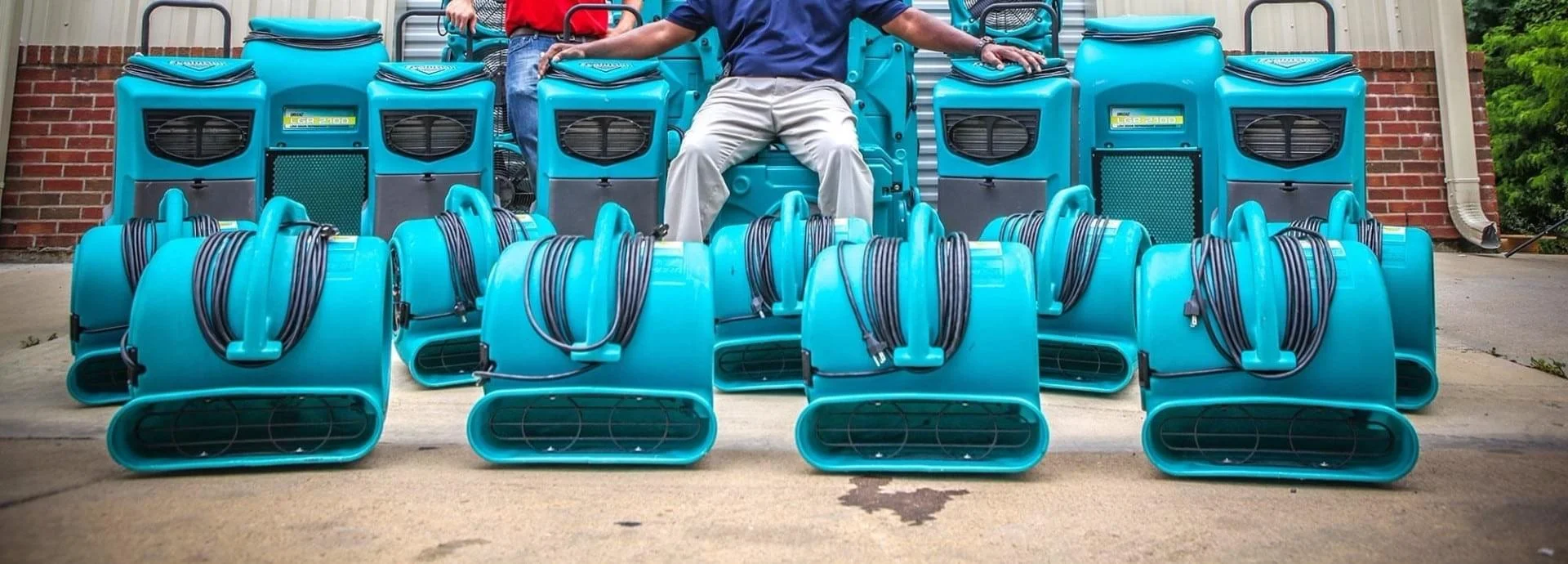
Industrial water extraction and drying equipment displayed outdoors against a brick building, showing the company's restoration and emergency response capabilities.

What 'In-Place' Drying Actually Means

There are two main approaches to structural drying. The first is tear-out: remove the drywall, pull up the flooring, expose the framing, and dry it with open-air circulation. The second is 'in-place' drying, where specialized equipment pushes conditioned air directly into wall cavities and under floor assemblies without removing materials first. We use 'in-place' drying as much as possible because it works. It's less invasive, it keeps your repair costs lower, and it doesn't leave your home open to secondary contamination. We won't tear out materials just to run a faster job ticket. If tear-out becomes necessary, we'll tell you why before we start.

How Structural Drying Works — Step by Step

Every structural drying job follows the same core sequence, even if the details change based on your specific situation.

Moisture Mapping

Before any equipment goes down, we use moisture meters and thermal imaging to find exactly where the water has traveled. Water doesn't stop at the obvious wet spot.
Water Extraction

Standing water and saturated materials get extracted first. Air movers can't do their job until the bulk water is out. This step also tells us how deep the saturation has gone.

Equipment Placement

Air movers and commercial dehumidifiers get positioned based on the psychometric conditions of the space — temperature, humidity, and airflow all factor into where each unit goes.

Daily Monitoring

We check moisture readings every day. Equipment gets moved, added, or removed based on what the numbers show. Drying isn't a set-it-and-leave-it job.

Documentation

Every reading gets logged. That documentation matters for your homeowner's insurance claim. We keep records throughout the entire drying event, start to finish.

Final Clearance

We don't call it done until moisture levels return to normal for the material type. Declaring victory early is one of the most common mistakes in this industry.

Industrial water extraction and drying equipment displayed outdoors against a brick building, showing the company's restoration and emergency response capabilities.

The Science Behind the Drying Process

A good understanding of 'psychometric' principles is what separates real structural drying from just pointing fans at a wet floor. Psychrometrics is the study of air and its relationship to moisture — temperature, relative humidity, dew point, and how air movement accelerates evaporation. When those variables are managed correctly, your structure dries efficiently. When they're not, you end up with equipment running for days longer than necessary, or worse, pockets of trapped moisture that don't show up until mold does. Our team understands how to read the conditions in your home and adjust the drying system accordingly. That knowledge is what keeps costs down and timelines honest. If mold remediation becomes necessary afterward, we handle that too.
Industrial water extraction and drying equipment displayed outdoors against a brick building, showing the company's restoration and emergency response capabilities.

Insurance and Structural Drying — What You Should Know

Most standard homeowner's insurance policies include coverage for sudden and accidental water damage, which is where structural drying falls. That includes burst pipes, appliance failures, and in some cases overflow events. What's typically not covered is flooding from outside the home or damage from long-term neglect. The documentation we produce during the drying process — moisture logs, equipment records, daily readings — is exactly what an insurance adjuster needs to process your claim accurately. We're not an insurance company and we can't tell you what your policy covers, but we can make sure the paperwork is thorough. Call 763-443-8184 and let's get the process started.
FAQ

Structural Drying — Common Questions

Straight answers to what homeowners ask most when water gets into their structure.
What is structural drying? +
Structural drying is the controlled removal of moisture from building materials after a water event. It goes beyond surface cleanup and targets the framing, subfloor, wall cavity, and other components that absorb water and hold it long after the visible water is gone. The goal is to return structural materials to their normal moisture content before that trapped moisture causes mold, rot, or warping.
What are the two types of drying? +
The two main methods are 'in-place' drying and demolition drying. 'In-place' drying uses air movers and dehumidifiers to dry materials without removing them. Demolition drying involves tearing out drywall, flooring, or insulation to expose the structure and dry it with open air. We use 'in-place' whenever the moisture levels and material types allow it, because it reduces repair scope significantly.
What is IICRC Applied Structural Drying? +
The IICRC (Institute of Inspection Cleaning and Restoration Certification) offers an Applied Structural Drying certification that covers the science and equipment procedures behind professional drying. It sets standards for how drying systems are designed, how equipment is placed and monitored, and how drying progress is documented. Working with technicians trained in these standards means the job gets done with a process, not guesswork.
How long does it take to dry out a house after a flood? +
A single affected room caught within 24 to 48 hours can be structurally dry in 3 to 5 days with proper equipment. Widespread flooding, delayed discovery, or materials like concrete slab and hardwood flooring can push that timeline to 7 to 14 days or longer. The biggest variable is how long water sat before extraction began. Every 24 hours of sitting water means deeper penetration and a longer drying cycle.
Can structural drying prevent mold from forming? +
Yes, when it's done fast enough and thoroughly enough. Mold needs moisture and time. The IICRC standard holds that mold growth begins in as little as 24 to 48 hours under the right conditions. Proper structural drying, started quickly and monitored to completion, removes the moisture before mold gets established. Stopping before the structure is truly dry is the scenario where mold removal becomes the next call.
Does homeowner's insurance cover structural drying costs? +
Standard homeowner's insurance usually covers structural drying when it's the result of a sudden and accidental event, like a burst pipe or failed appliance. External flooding from groundwater or storm surge typically requires a separate flood insurance policy. Gradual leaks that weren't addressed are often excluded as maintenance issues. The documentation we produce throughout the drying process is important for getting your claim processed correctly.
Free In-Home Estimate

Water Got In. Call Before It Gets Worse.

Every hour matters when water is in your structure. Presto Restore is available 24 hours a day, 7 days a week. Call 763-443-8184 and we'll get equipment on-site fast.

Call (763) 443-8184

Or send us your info

optional

No obligation · Licensed & Insured in Minnesota