
Black and White Minimalist Square Company Logo
Presto Restore Minneapolis, MN
MN Mold Remediation by Certified Technicians, 24/7
Family-owned · Locally Trusted

MN Mold Remediation by Certified Technicians, 24/7

Mold growing in your home? Certified technicians respond 24/7 across the Twin Cities metro. Safe removal, antimicrobial treatment, same-day response. Call now.

24/7Calls answered
1–2hDry time
7-DayGuarantee
AntimicrobialCleaningHandymanEco-Friendly
FreeEst.
Instant Quote

Get a real estimate in 60 seconds.

We'll follow up within one business day. No pressure, no upsells.

No obligation · Responds within 1 business day

Carpet CleaningWater ExtractionUpholsteryTile & GroutAir Duct CleaningOdor RemovalPet StainsCommercialCarpet CleaningWater ExtractionUpholsteryTile & GroutAir Duct CleaningOdor RemovalPet StainsCommercial

Mold doesn't wait, and neither do we. MN mold remediation is one of the most time-sensitive jobs in home restoration because every hour of delay lets spores spread further into walls, flooring, and HVAC systems. Our Certified Technicians have seen it all, from a few square feet of surface growth to full basement colonies four feet high. If you're seeing discoloration, smelling something musty, or dealing with a recent water event, don't guess. Call Presto Restore at 763-443-8184 and we'll get someone out to you fast.

Our mold remediation process covers the full scope: inspection, containment, physical removal, antimicrobial treatment, and structural drying to stop regrowth before it starts. Cost depends on the affected area, how deep the mold has penetrated, the materials involved (drywall absorbs differently than concrete), and whether structural drying is needed afterward. A small isolated patch costs far less than a spread that's reached the subfloor or framing, and that range is wide for a reason. A job might run anywhere from a few hundred dollars to $5,000 or more depending on scope. Every job is different. Contact Presto Restore for an accurate estimate.

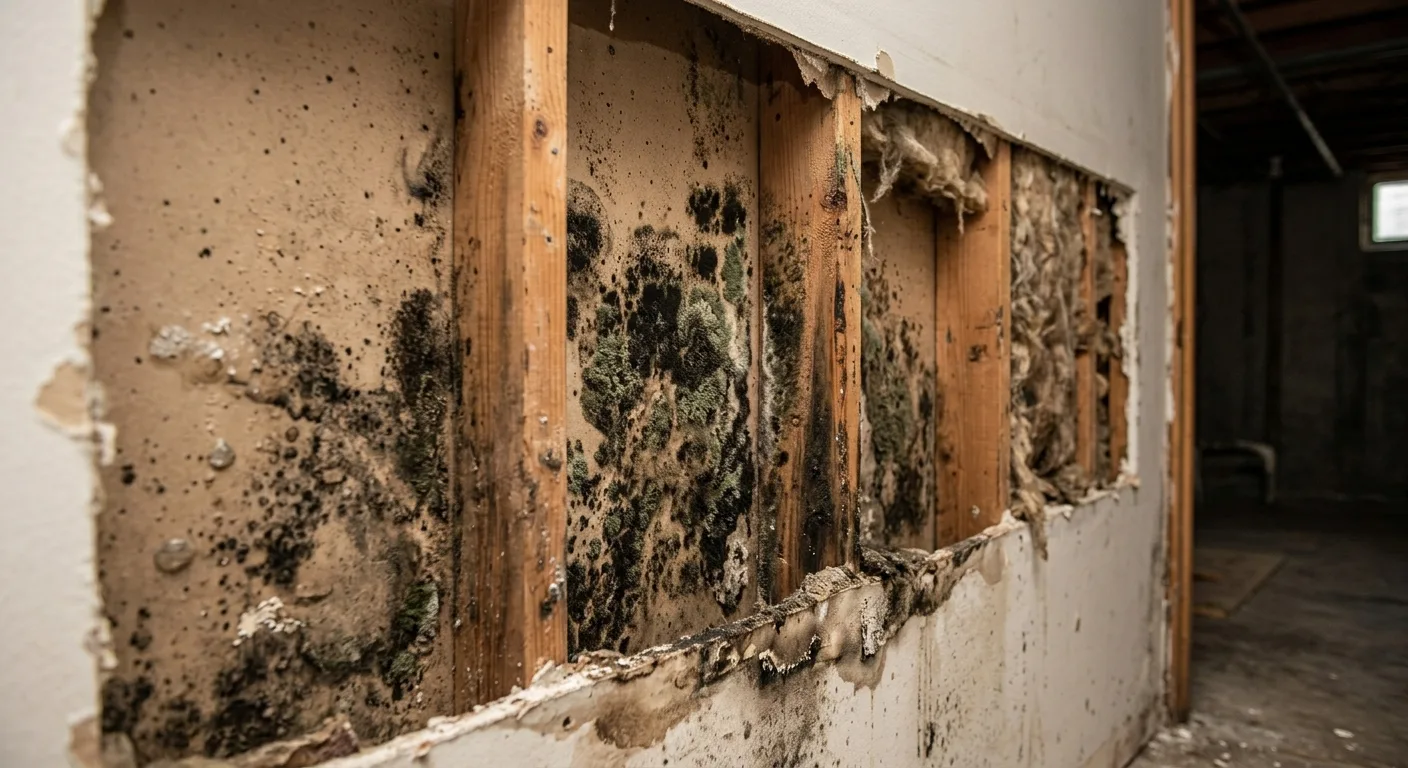
Deep cleaning service in a basement or cellar space showing significant mold and dirt buildup on walls and floor before treatment.

What MN Mold Remediation Actually Involves

Mold removal isn't just spraying bleach and wiping surfaces. That approach handles what you can see and leaves the root system behind. Real remediation means containing the affected zone so spores don't travel to clean areas of the home, removing compromised materials that can't be treated, applying EPA-registered antimicrobials to the underlying surfaces, and then drying everything down to a moisture level where mold can't regrow. We use our Innovative Drying, Dehumidifying, Deodorizing, and Disinfecting Process on every job. That's the difference between a house that tests clean six months later and one you're calling us back to re-treat. We won't skip the drying phase just to get off a job faster.

Our Mold Remediation Process, Step by Step

Every job follows the same structured sequence so nothing gets missed.

Inspection and Moisture Mapping

We locate the mold source and map moisture levels in surrounding materials. You can't remediate what you haven't found. We check behind walls, under flooring, and in cavities that look clean from the surface.
Containment Setup

Before any removal starts, we seal off the affected zone with physical barriers and negative air pressure. This keeps spores from migrating to clean rooms during the work.

Removal and Disposal

Porous materials that have absorbed mold growth, like drywall and insulation, get bagged and removed. Hard surfaces get scrubbed to bare material. We don't patch over it.

Antimicrobial Treatment

Every treated surface gets an application of EPA-registered antimicrobial solution to kill residual spores and inhibit regrowth. This step is non-negotiable on any job we do.

Structural Drying

Mold lives where moisture lives. After removal, we run industrial dehumidifiers and air movers until moisture readings are in the safe range. Skipping this step is how mold comes back within weeks.

Post-Remediation Verification

We don't call a job done until the space passes a final moisture and visual check. Our Certified Technicians walk you through what was found, what was done, and what to watch for going forward.

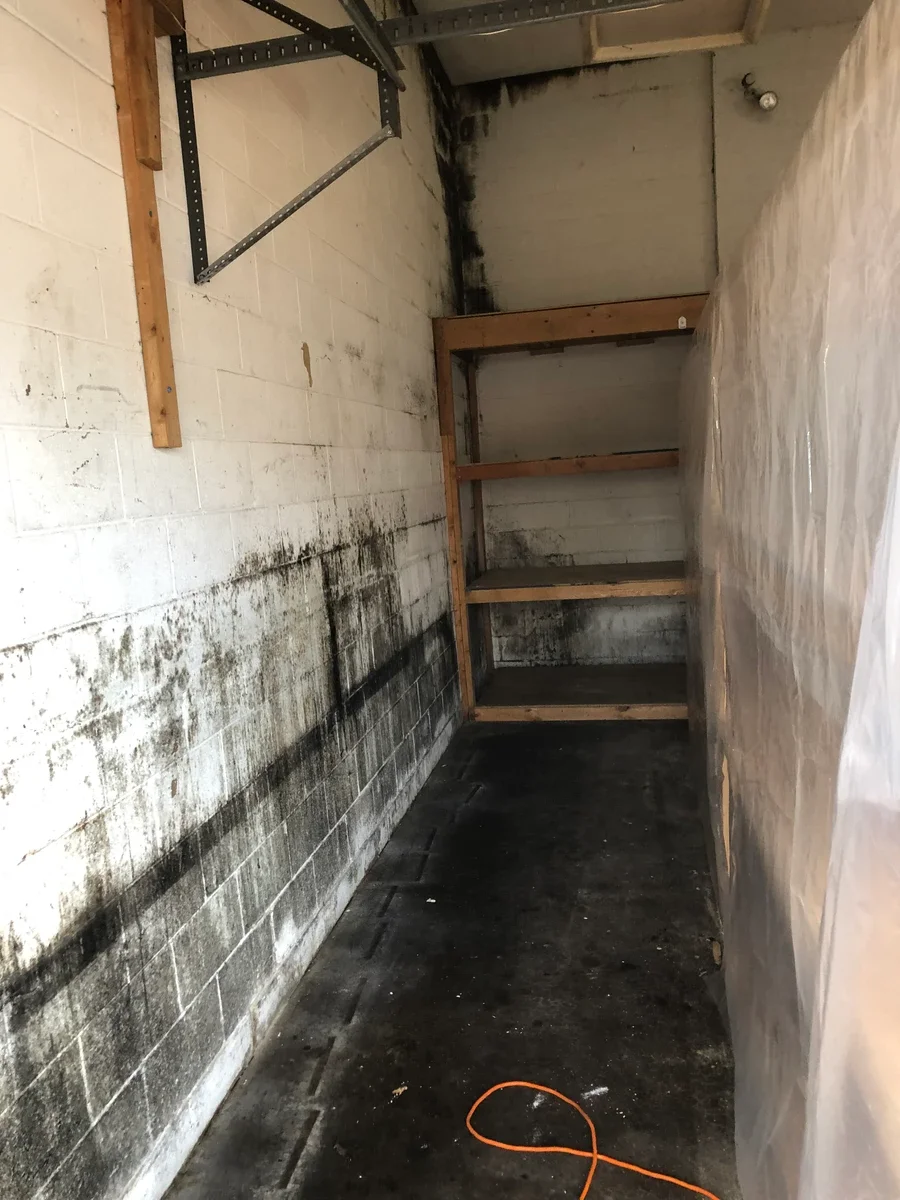
Deep cleaning service in a basement or cellar space showing significant mold and dirt buildup on walls and floor before treatment.

When to Call a Professional vs. Handle It Yourself

Small surface mold on a bathroom tile grout line, less than 10 square feet, is something many homeowners can clean safely with the right product and ventilation. Anything larger than that, anything inside walls or under flooring, anything following a water damage event, or anything you've already tried to clean that came back: call a professional. Minnesota's climate makes this a real issue. Spring thaw drives basement moisture up fast, and a wet winter followed by a warm snap is exactly the condition mold needs to establish. If your home had any water intrusion in the last 30 days and you're now noticing an odor or discoloration, don't wait it out. Call 763-443-8184. We're available 24/7 and we can tell you over the phone whether what you're describing sounds like a professional job.

What Customers Say About Presto Restore

Real feedback from real restoration jobs across the Twin Cities metro.

I had mold 4 feet high in my basement. Presto Restoration removed it and I was able to move my 2 year old son and 5 year old daughter back into my house the next day!

— Verified Customer

Pipes broke in the upstairs of my house and Presto Restoration was here within 20 minutes to clean and get me back on my feet.

— Verified Customer

Presto Restoration was on time, very nice staff, and got the water out of my basement in no time!

— Verified Customer

My apartment's tub overflowed and was cleaned up within hours after I called Presto Restoration.

— Verified Customer
Deep cleaning service in a basement or cellar space showing significant mold and dirt buildup on walls and floor before treatment.

Mold After Water Damage: Why Timing Is Everything

Most mold problems we see in the Twin Cities metro started as water damage problems that didn't get dried out fast enough. Mold colonizes wet organic material in as little as 24 to 48 hours under the right temperature conditions. That's not a scare statistic; that's the biology. If you had a burst pipe, a flooded basement, or a slow leak that went undetected, the mold clock started the minute the water touched your walls. Our mold remediation resources cover what to do in those first hours. If the event already happened and you're past that window, the answer is the same: call us, get the moisture measured, and know exactly what you're dealing with before it spreads further.
Free In-Home Estimate

Mold in Your Home? We Respond 24/7.

Presto Restore's Certified Technicians serve the Twin Cities metro around the clock. Don't let a mold problem grow while you wait for business hours. Call us now and we'll get someone moving.

Call (763) 443-8184

Or send us your info

optional

No obligation · Licensed & Insured in Minnesota

FAQ

Frequently Asked Questions

How do I remove mold myself? +
For surface mold under 10 square feet on non-porous materials like tile or glass, a solution of detergent and water followed by an EPA-registered disinfectant can work. Wear an N95 respirator, gloves, and eye protection. The problem is porous materials: drywall, wood framing, and insulation absorb mold into their structure. Scrubbing the surface doesn't reach the growth inside. If mold is on drywall or wood, or if it followed a water damage event, professional removal is the right call.
Can mold be completely removed from a home? +
Yes, with the right process. Porous materials that have absorbed mold growth are removed entirely and disposed of. Hard surfaces get mechanically cleaned down to bare material and then treated with EPA-registered antimicrobials. The key step most DIY attempts skip is structural drying afterward: if the moisture that fed the mold isn't eliminated, regrowth is a matter of time regardless of how thorough the removal was. Done correctly, remediation produces a space that tests clean and stays clean.
What are the first signs of mold sickness? +
The most common early symptoms are respiratory: nasal congestion, coughing, throat irritation, and worsening asthma or allergy symptoms. Eye irritation and skin rashes appear in some people. The tricky part is that these symptoms overlap with seasonal allergies, so many people don't connect them to indoor mold exposure until symptoms improve when they leave the home. If symptoms clear up when you're away from the house and return when you come back, get the space inspected.
How much does it usually cost to remove mold? +
Mold remediation in Minnesota typically ranges from a few hundred dollars for a small contained area to $5,000 or more for extensive growth that has penetrated framing or spread across multiple rooms. The main cost drivers are the total affected area, how deeply the mold has penetrated the material, whether structural components need to be removed and replaced, and the extent of drying work required afterward. Every job is different. Contact Presto Restore for an accurate estimate.
How long does mold remediation take from start to finish? +
A single affected room with contained growth typically takes one to two days for removal, treatment, and initial drying. Larger jobs with multiple rooms or deep structural penetration can run three to five days, including the time needed to bring moisture readings into the safe range before the space is cleared. We won't close out a job until the drying phase is complete because that's the step that determines whether the mold stays gone.
Does mold remediation also include treating the HVAC or air ducts? +
Mold spores travel through air, which means active HVAC systems can distribute them throughout a home during a remediation event. We assess the HVAC situation on every job. If the system pulled air through the affected zone, duct cleaning is often part of the remediation scope. Our air duct cleaning service handles that side of the work so spores don't recirculate after the visible mold is gone.
What causes mold to keep coming back after it's been treated? +
Mold returns when the moisture source that caused it hasn't been addressed. Removing the visible growth without fixing the underlying humidity problem, the slow pipe leak, the inadequate ventilation, or the grade that drains toward the foundation, means you've cleaned the symptom, not the cause. Our process includes moisture mapping to identify where water is entering or accumulating. If we find a source that needs a plumber or contractor, we'll tell you directly so the fix is permanent.