Black and White Minimalist Square Company Logo
Presto Restore Minneapolis, MN
Water Extraction Services: Fast Response, Full Restore
Family-owned · Locally Trusted

Water Extraction Services: Fast Response, Full Restore

Standing water destroys fast. Presto Restore's certified techs extract, dry, and disinfect 24/7 across the Twin Cities metro. Call now: 763-443-8184.

24/7Calls answered
1–2hDry time
7-DayGuarantee
AntimicrobialCleaningHandymanEco-Friendly
FreeEst.
Instant Quote

Get a real estimate in 60 seconds.

We'll follow up within one business day. No pressure, no upsells.

No obligation · Responds within 1 business day

Carpet CleaningWater ExtractionUpholsteryTile & GroutAir Duct CleaningOdor RemovalPet StainsCommercialCarpet CleaningWater ExtractionUpholsteryTile & GroutAir Duct CleaningOdor RemovalPet StainsCommercial

Water extraction is the emergency removal of standing water from a flooded home or building before it soaks into walls, subfloor, and structural materials. Every hour you wait, the damage gets worse and the bill gets bigger. Do not panic. Call Presto Restore at 763-443-8184 and our trained, certified technicians will be on-site fast, any hour, any day.

Our process doesn't stop at pulling water out. True restoration means working through all Four Ds: Drying, Dehumidifying, Deodorizing, and Disinfecting. We deploy industrial dehumidifiers and high-velocity air movers to drive moisture out of materials that a shop vac will never reach. What drives cost up or down on a water extraction job is scope: how much water, how long it sat, what materials it touched, and whether mold remediation becomes necessary after drying. Jobs can range from a few hundred dollars for a small contained leak to several thousand for a finished basement with saturated framing. Every job is different. Contact Presto Restore for an accurate estimate.

water extractions work — professional service in Minneapolis, MN

What Happens During a Water Extraction Job

The moment we arrive, we assess the source and stop the water if it's still running. Then we move household items out of the damage zone to prevent further loss. High-powered extraction equipment pulls standing water from carpet, flooring, and low areas first. From there, we transition to structural drying with professional-grade dehumidifiers and air movers placed strategically to pull moisture out of walls and subfloor. We monitor moisture readings throughout the job. The work isn't done until the numbers confirm it's dry.

The Four Ds: How We Get You Back to Normal

Most companies stop at wet-vac and fans. We don't.

Drying

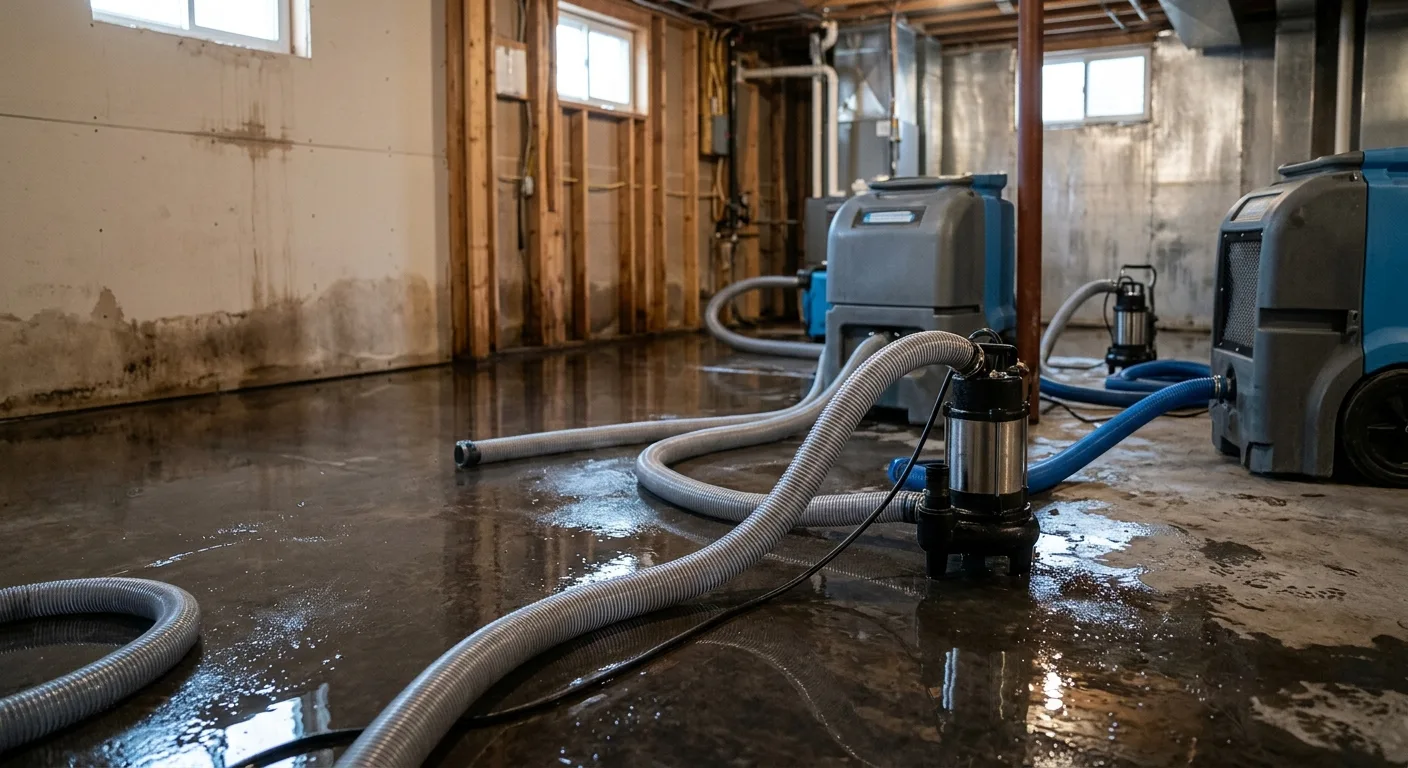
Industrial air movers create high-velocity airflow across wet surfaces, pulling moisture up and out of flooring, walls, and structural materials that passive drying can't reach.
Dehumidifying

Commercial-grade dehumidifiers pull moisture out of the air before it re-absorbs into dry materials nearby. This is what prevents a dried floor from warping two weeks later.

Deodorizing

Standing water carries bacteria and organic material. We treat affected areas so you're not left with a musty smell that sets in permanently once the room closes back up.

Disinfecting

Floodwater isn't clean water. Whether it's a burst pipe or a sewage backup, we disinfect every surface the water touched. Skipping this step is how mold and illness follow a flood.
water extractions work — professional service in Minneapolis, MN

When to Call Us vs. Handling It Yourself

A single cup of spilled water on hard flooring? You can handle that. A burst pipe, a backed-up drain, or anything that soaked into carpet or drywall? That's our call. Wet drywall that isn't dried within 24 to 48 hours starts growing mold. Wet carpet padding holds moisture for days even when the surface feels dry, which is exactly why pad replacement is often necessary after a real flood event. If you're asking yourself whether you need a professional, the answer is probably yes. The cheap option almost always costs more by the time you call us to fix what was missed.

What Makes a Water Extraction Job Go Right

Speed matters most. The faster water is removed, the less it penetrates. Here's what a well-executed extraction looks like from start to finish:

Rapid Dispatch

We're available 24/7 across the Twin Cities metro. When you call 763-443-8184, a real person answers and we dispatch immediately.

Source Control First

Before extraction begins, the water source is identified and stopped. Pulling water while the source is still running wastes time and materials.

Moisture Mapping

Technicians use moisture meters to map the full extent of saturation before and after drying. Guessing is how damage gets missed.

Clearance Verification

We don't call a job done until moisture readings confirm dry. You get a job that's actually finished, not one that fails inspection two weeks later.

Signs You Need Water Extraction Right Now

Act on any one of these:

Standing water on any floor surface

Even an inch of standing water can saturate subfloor and travel under walls farther than you can see.

Carpet that squishes when you walk on it

The surface feeling dry doesn't mean the padding underneath is dry. Wet padding is a mold factory in 24 to 48 hours.

Drywall that looks wet or discolored

Discoloration means water has already wicked up into the wall cavity. This almost always requires professional drying to prevent structural damage.

A musty smell after any flooding event

Musty odor after flooding means microbial growth has already started. Call us before that requires full mold removal.

Any flood during a Minnesota winter or spring thaw

Frozen pipes bursting and spring basement flooding are the most common calls we get. Cold temps slow drying and mask how far water has traveled.
water extractions work — professional service in Minneapolis, MN

Serving the Twin Cities Metro, 24 Hours a Day

We cover over 90 locations across the Twin Cities region, from Blaine and Coon Rapids in the north to Burnsville and Apple Valley in the south. Minnesota winters create real risk: pipes freeze, thaw, and burst. Spring snowmelt floods basements. We've seen it all, and we've dried it all. If you're in the metro, we're close. If it's 2am, we're still answering. You can also check our blog for seasonal tips on protecting your home before the next freeze-thaw cycle.

Water Extraction: Quick Facts

Structured breakdown for fast reference:

Response time

24/7 dispatch across the Twin Cities metro. We aim to be on-site fast after your call.

What we extract

Carpet, padding, hardwood, tile, subfloor, crawlspaces, basements, and wall cavities.

Equipment used

Truck-mounted and portable extraction units, industrial air movers, commercial dehumidifiers, moisture meters.

Mold risk window

Mold growth begins within 24 to 48 hours of a water event. Speed of extraction directly limits mold risk.

Follow-on services

Structural drying, mold remediation, pad replacement, air duct cleaning if moisture entered the HVAC system.

Free In-Home Estimate

Call Now — We Answer 24/7

Don't wait to see if it dries on its own. It won't. Call Presto Restore at 763-443-8184 and we'll dispatch a certified technician to your location. Fast Response. Full Restore.

Call (763) 443-8184

Or send us your info

optional

No obligation · Licensed & Insured in Minnesota

FAQ

Frequently Asked Questions

What is a water extraction? +
Water extraction is the professional removal of standing or absorbed water from a structure using industrial-grade vacuum and pump equipment. It's the first step in any flood response. The goal is to pull water out before it penetrates structural materials like subfloor, wall framing, and insulation. Without extraction, passive drying takes far too long and mold growth begins within 24 to 48 hours.
How long does a water extraction take? +
The extraction itself, pulling out standing water, typically takes one to four hours depending on the volume of water and the affected area. The full drying process that follows takes significantly longer: most residential jobs require two to five days of continuous dehumidification and air movement before moisture readings confirm the structure is dry. We monitor daily and don't close the job until it's done.
What are the methods of water extraction? +
The two primary methods are truck-mounted extraction, which uses a powerful vacuum system in the service vehicle, and portable extraction units, which can reach areas a truck system can't access. After standing water is removed, we use targeted drying with high-velocity air movers and commercial dehumidifiers to pull residual moisture from materials. For carpet, we often combine extraction with pad removal when the padding has fully saturated.
What does water extraction mean for my floors and walls? +
Extraction removes water from surfaces, but walls and floors often retain moisture even after visible water is gone. Drywall wicks water upward through capillary action. Hardwood floors cup and buckle from moisture below the surface. Subfloor can delaminate if wet too long. That's why moisture meters guide our process from start to finish. We treat what the equipment confirms is wet, not just what looks wet.
Will my carpet need to be replaced after water extraction? +
Not always. Carpet extracted quickly, within a few hours of the flood event, and dried thoroughly often survives without replacement. The padding underneath is a different story: carpet pad holds water like a sponge and rarely dries adequately in place. In most flood scenarios, pad replacement is necessary even when the carpet itself can be saved. We'll give you an honest assessment on-site.
Does water extraction prevent mold? +
Rapid, thorough extraction is the single most effective thing you can do to limit mold risk. Mold spores need moisture and time. Remove the moisture fast enough and you remove the condition mold needs to colonize. If extraction is delayed past 48 hours or drying is incomplete, the risk increases significantly. In cases where mold has already started, we coordinate mold remediation as part of the restoration scope.
Is water from a burst pipe cleaner than water from a sewer backup? +
Yes, and the difference matters for how we treat the job. Clean water from a supply line or burst pipe is Category 1 and poses lower contamination risk. Water from a toilet overflow or washing machine drain is Category 2. Sewer backup or external flooding is Category 3, the most contaminated. Category 2 and 3 jobs require antimicrobial treatment and sometimes content disposal that Category 1 jobs don't. We assess the source immediately on arrival.